


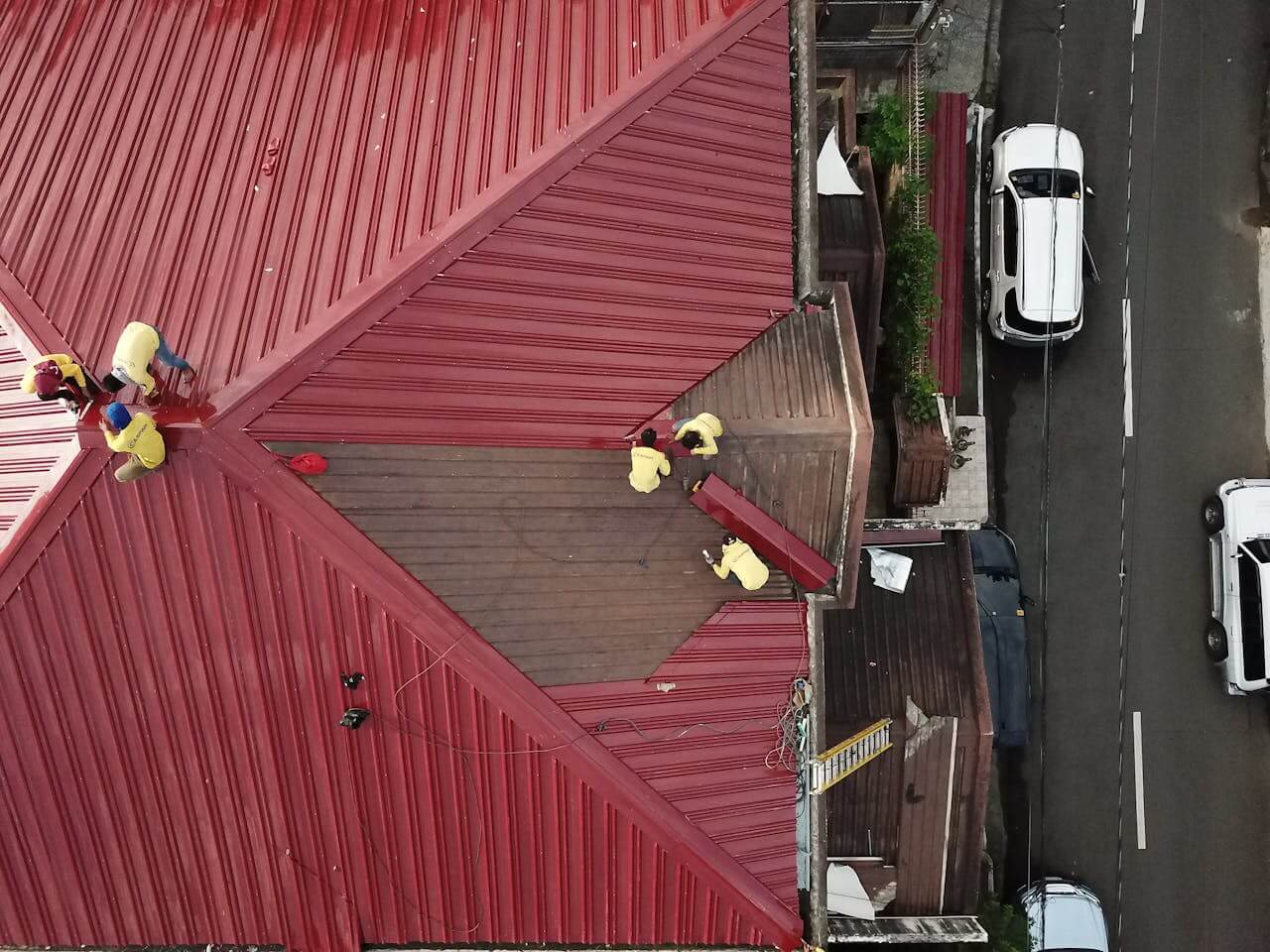
Franklin isn’t gentle on roofs. Summers sit heavy, humid air pressing down, storms roll in quickly; then winter snaps in colder than expected, not brutal but enough to stress things that were already tired. Houses here age in quiet ways. Shingles curl a little, flashing loosens a bit, nothing dramatic at first. You look up, and it seems fine. It usually does, until it doesn’t. People wait. Too long sometimes. A roof doesn’t fail all at once; it drifts there, piece by piece, and by the time it’s obvious you’re not choosing anymore, you’re reacting.
Shingles Start Telling on You
Look closely. Or don’t, sometimes it’s visible from the driveway. Shingles that used to lie flat now lift at the corners, edges look chewed, and color fades unevenly. Granules collect in gutters, a sandy mess that shouldn’t be there. That’s not cosmetic. It’s a loss of protection. The surface that sheds water is thinning out; UV has done its work. And once granules are gone, the rest goes faster.
Cracks show up too, small lines at first, then wider, splitting through. Some shingles go missing entirely; wind takes them, or they just give up. You replace a few, sure, and patchwork holds for a while. But if it’s happening across the roof, different spots, not just one area, it’s a pattern. Patterns mean age, not accident.
Age Isn’t a Guess
Roofs have a lifespan. Asphalt shingles, common here, may last 20–25 years if conditions are decent. Less if storms are frequent, if the installation wasn’t perfect. More, occasionally, but don’t count on it. If you don’t know the age, find out. Records, old paperwork, ask previous owners. If it’s nearing that range, even if it looks okay, it’s on borrowed time.
This is where people in states like Tennessee start talking about options, asking neighbors, getting quotes for roof replacement in Franklin, because they’ve seen how fast things turn once that age line is crossed. Not panic, more like recognition. Acknowledging the clock.
Water Doesn’t Wait for Permission
Leaks rarely announce themselves clearly. A stain on the ceiling, a faint ring, maybe brownish. You ignore it. Next rain, it grows. Then a drip. Sometimes it dries and disappears, tricking you. But water got in. It doesn’t leave politely. It soaks insulation, seeps along beams, finds nails, and follows them down. You might hear it before you see it, soft tapping in the attic during a storm. Or smell it. That damp, almost sweet odor that shouldn’t exist indoors.
And once moisture settles, mold isn’t far behind. Not always visible, but it spreads. Air quality shifts. People feel it before they identify it. You could fix the leak, yes, patch the spot, but if the roof is letting water in at multiple points, repairs stack up. Money goes out, problem stays.
The Roofline Tells a Story
Stand back. Look at the shape. Roofs are supposed to be straight, mostly. If there’s a dip, just a slight sag, it matters. It could be decking underneath weakening, maybe long-term moisture damage, or maybe structural fatigue. It’s not just surface anymore. That’s deeper. Heavier fix. Sometimes sections look wavy, not quite aligned; it’s subtle until you notice, then you can’t unsee it.
And flashing, those thin metal strips around chimneys, vents, edges, they fail quietly. Rust creeps in, edges lift. Water sneaks through seams you didn’t know existed. People rarely check flashing. They should.
Energy Bills Whisper Clues
Strange sign, but it shows up. Bills are creeping higher without a clear reason. AC works harder in summer, and heat escapes in winter. The roof plays a role. Poor ventilation and degraded materials affect insulation performance. Hot air gets trapped; cold air leaks out. It’s not always obvious, but over time, you notice the difference. Rooms that were comfortable before now feel off. Drafts where there shouldn’t be any. It’s not just walls or windows. Sometimes it’s above you.
Moss, Algae, the Green Problem
In humid stretches, you’ll see it: dark streaks, patches of green, moss settling in. Looks minor, almost decorative from a distance. It’s not harmless. Moss holds moisture against the roof surface, keeping it wet longer than it should be. That accelerates decay. Algae stains don’t always damage immediately, but they signal conditions that favor growth, which usually means dampness. Persistent dampness is never good for roofing.
Cleaning helps, temporarily. But if growth returns quickly, the underlying issue remains.
Repairs That Keep Repeating
One repair makes sense. Two, maybe. But if you’re calling someone every year, sometimes twice, fixing a different spot each time, it adds up. Not just cost. Time, disruption. You patch here, then there. Meanwhile, the rest of the roof continues aging. At some point, replacing becomes cheaper than maintaining. Hard to accept, but true.
Contractors will tell you, sometimes too early, sometimes too late. You have to read the pattern yourself. Frequent repairs mean the system is failing, not just parts.
Inside the Attic, Quiet Evidence
Most people don’t go up there often. They should. Attic spaces reveal things the exterior hides. Daylight peeking through boards, that’s a gap. Not good. Damp insulation, compressed or discolored. Wood that feels soft, not solid. Nails are showing rust. These are internal signs of external failure.
Ventilation matters too. If it’s poor, heat builds, and moisture lingers. That shortens roof life from the inside out. You fix the surface, but if airflow isn’t addressed, problems return.
Storm Aftermath Isn’t Always Obvious
After a heavy storm, you might check for visible damage. Missing shingles, debris. If nothing stands out, you move on. But small impacts, hail, for instance, can bruise shingles without tearing them. Damage isn’t always visible from the ground. Over time, those bruised spots crack and break down faster.
Wind lifts edges slightly, not enough to rip them off, just enough to weaken seals. Next storm finishes the job. It’s cumulative. One event rarely destroys a roof unless it’s extreme. It’s the series, the repetition.
When It Stops Making Sense to Wait
There’s a point where waiting costs more than acting. Hard to define exactly, but you feel it, repairs stacking, signs increasing, confidence dropping. You look up before every storm, wondering if this is the one. That’s not how it should be.
Replacing a roof isn’t small. It’s disruptive, expensive, and inconvenient. But it resets things. Protection restored. Worry reduced. Sometimes that’s worth more than stretching the life of something that’s already near the end.
Not every sign means immediate replacement. Context matters. Age, extent of damage, and local weather patterns. But ignore enough small warnings, and they become one large problem. It doesn’t announce itself cleanly. It creeps.
Some people act early, maybe too early. Others push it until failure forces the issue. Most sit in between, uncertain. That’s normal. But if you’re seeing multiple signs, visible wear, leaks, rising bills, repeated fixes, it’s not random anymore.
You don’t need perfection to decide. Just enough evidence. Then act.