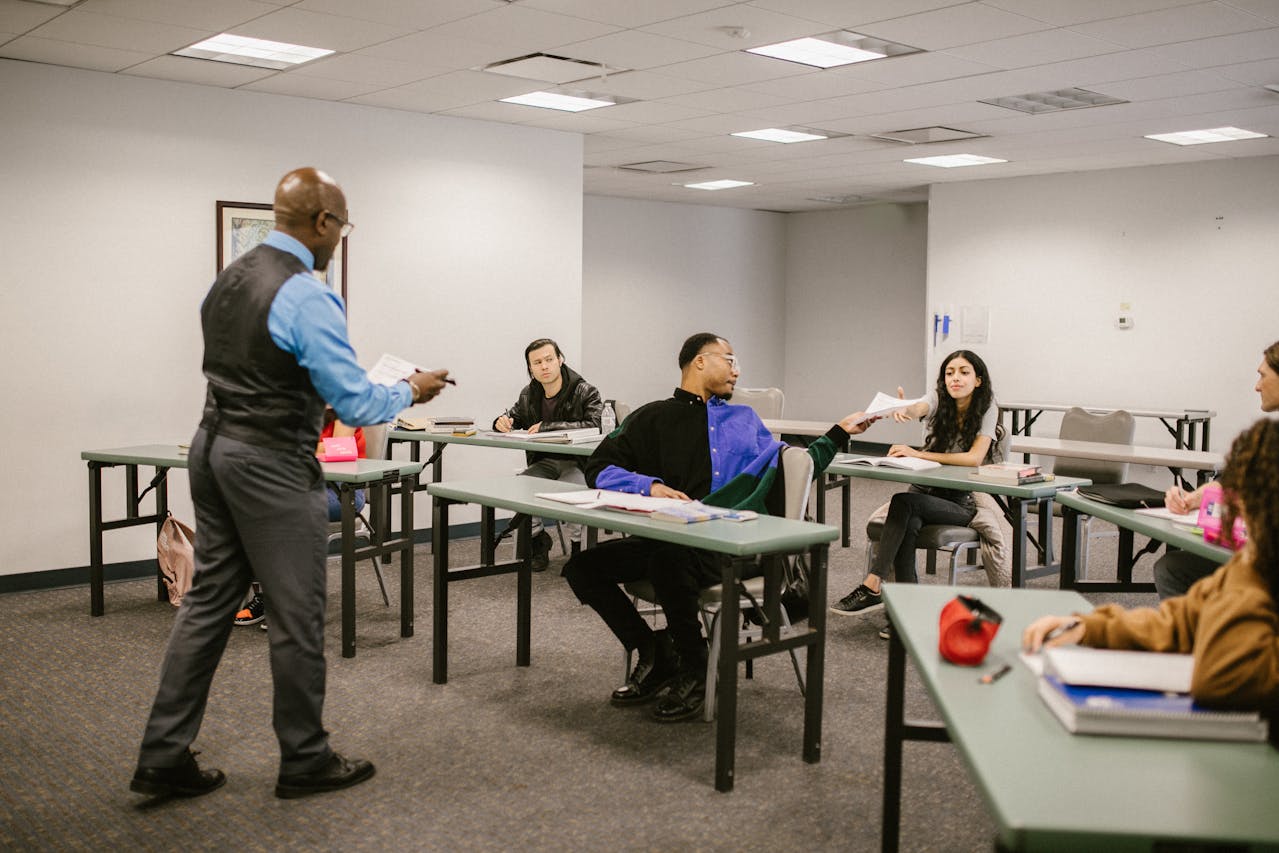
Student outcomes often say more about training quality than curriculum descriptions ever could. Scores, observations, and performance patterns reveal how well students handle real responsibilities, not hypothetical ones. Education fields that rely on applied skills depend heavily on how students respond to actual situations involving people, judgment, and accountability. Hands-on training places students in those situations early, allowing outcomes to surface naturally through performance rather than prediction.
Programs that integrate applied learning tend to reveal strengths and gaps faster because students must operate within real constraints. Communication, adaptability, and decision-making become visible through action. Student outcomes from these environments show how well learners translate academic understanding into practice, offering insight that written exams alone cannot provide.
Bridging Theory with Real Communication Demands
Applied training creates conditions where theory must function in live settings. Concepts related to language, learning, behavior, and instruction gain meaning once students interact with real individuals. Outcomes from this type of training often show stronger comprehension because students connect ideas directly to observable results rather than abstract scenarios.
Education paths leading toward roles such as a speech language pathologist illustrate this connection well. Students exposed to real communication demands develop practical awareness that cannot come from lectures alone. Outcomes show increased readiness in handling variability, responsiveness, and accountability because communication occurs with real consequences, not simulated ones.
The structure behind this preparation aligns closely with speech language pathologist education requirements, which include extensive supervised practice alongside academic coursework. Those requirements exist because outcomes consistently demonstrate that applied experience sharpens judgment, strengthens skill application, and prepares students for professional responsibility far beyond classroom discussion.
Exposing Gaps Between Textbook Knowledge and Learner Interaction
Hands-on training quickly brings unseen gaps to the surface. Knowledge that appears solid in written assessments may falter during direct interaction with learners. Student outcomes from applied settings highlight areas where understanding remains theoretical rather than functional.
Direct engagement requires responsiveness, flexibility, and clarity. Students may know instructional strategies yet struggle to apply them under real conditions. Outcomes gathered from these experiences provide valuable insight into which concepts need reinforcement and which skills require guided practice. This visibility helps programs refine instruction based on evidence rather than assumptions.
Early Assessment Practice and Professional Judgment
Assessment skills form a core component of many education fields. Introducing assessment practice early allows students to build judgment through repetition and feedback. Outcomes from programs that prioritize early assessment exposure show stronger decision-making during later coursework and field placements.
Students learn to observe, interpret data responsibly, and adjust actions based on findings. These abilities develop through practice rather than memorization. Outcomes from applied assessment experiences reveal increased confidence and accuracy because students learn to trust structured observation instead of relying on guesswork.
Adapting Instruction to Individual Learner Needs
Applied experiences place students in environments where learners differ widely in ability, communication style, and responsiveness. Instruction must adapt in real time. Student outcomes from these settings often show improved flexibility and responsiveness.
Through direct interaction, students learn to adjust pacing, language, and instructional approach based on immediate feedback. Outcomes demonstrate stronger alignment between learner needs and instructional choices because students gain experience responding to individuals rather than averages. This adaptability becomes visible through improved engagement and effectiveness.
Ethical Awareness Through Direct Responsibility
Responsibility changes how students approach their work. Applied training introduces real accountability, which influences ethical awareness in meaningful ways. Student outcomes from supervised practice settings often show increased care in decision-making, documentation, and professional conduct.
Direct responsibility encourages students to consider impact, consent, and professional boundaries. Outcomes reveal that ethical understanding grows stronger through lived experience rather than theoretical discussion alone. Students learn to act thoughtfully because their decisions affect real people, reinforcing ethical judgment as an active skill.
Managing Unpredictability in Learning Environments
Hands-on training places students in environments where plans rarely unfold exactly as expected. Learners respond differently, schedules change, and instructional strategies sometimes fall short. Student outcomes from applied settings show how effectively individuals respond when situations require adjustment rather than preparation alone.
Students exposed to unpredictable conditions learn to stay attentive and responsive. Outcomes often show improved problem-solving and composure because students practice making decisions under real constraints. This experience builds practical awareness that cannot be developed through controlled classroom scenarios. Graduates from programs with applied components tend to handle uncertainty with greater confidence because they have already faced it in supervised settings.
Identifying Strengths and Limitations Early in Training
Applied learning helps students understand their own capabilities sooner. Classroom performance alone may mask areas where additional support or refinement is needed. Hands-on experiences bring those areas into focus through direct performance.
Student outcomes frequently show that early exposure to practice settings helps individuals recognize where they excel and where further development is required. This awareness supports more intentional learning choices. Students seek targeted feedback, engage more actively with instruction, and approach skill development with a clearer purpose.
Resilience Built Through Supervised Challenge
Supervised challenges play a key role in professional preparation. Applied training introduces difficulty within a structured environment where guidance and feedback are available. Student outcomes from these experiences often demonstrate increased persistence and emotional regulation.
Facing difficulty while supported teaches students how to recover from mistakes and adjust strategies responsibly. Outcomes show that students become more comfortable receiving critique and applying it constructively. This resilience develops through experience, as students learn that progress comes through effort and reflection rather than avoidance.
Smoother Transitions into Professional Roles
Students who complete hands-on training often enter professional roles with greater ease. Familiarity with expectations, responsibilities, and real-world interactions reduces the adjustment period after graduation. Student outcomes support this connection by showing stronger readiness and confidence during early career stages.
Applied experience prepares students to navigate professional environments with awareness and adaptability. They understand workflow, documentation standards, and collaboration expectations because they have practiced them. Outcomes indicate that these students rely less on trial-and-error and more on informed decision-making as they begin their careers.
Student outcomes provide clear insight into the value of hands-on training in education fields. Applied learning reveals how well students translate knowledge into action, manage responsibility, and adapt to real conditions. These outcomes highlight readiness, judgment, and resilience that cannot be measured through coursework alone. Education programs that prioritize hands-on experience prepare students for the realities of professional practice.