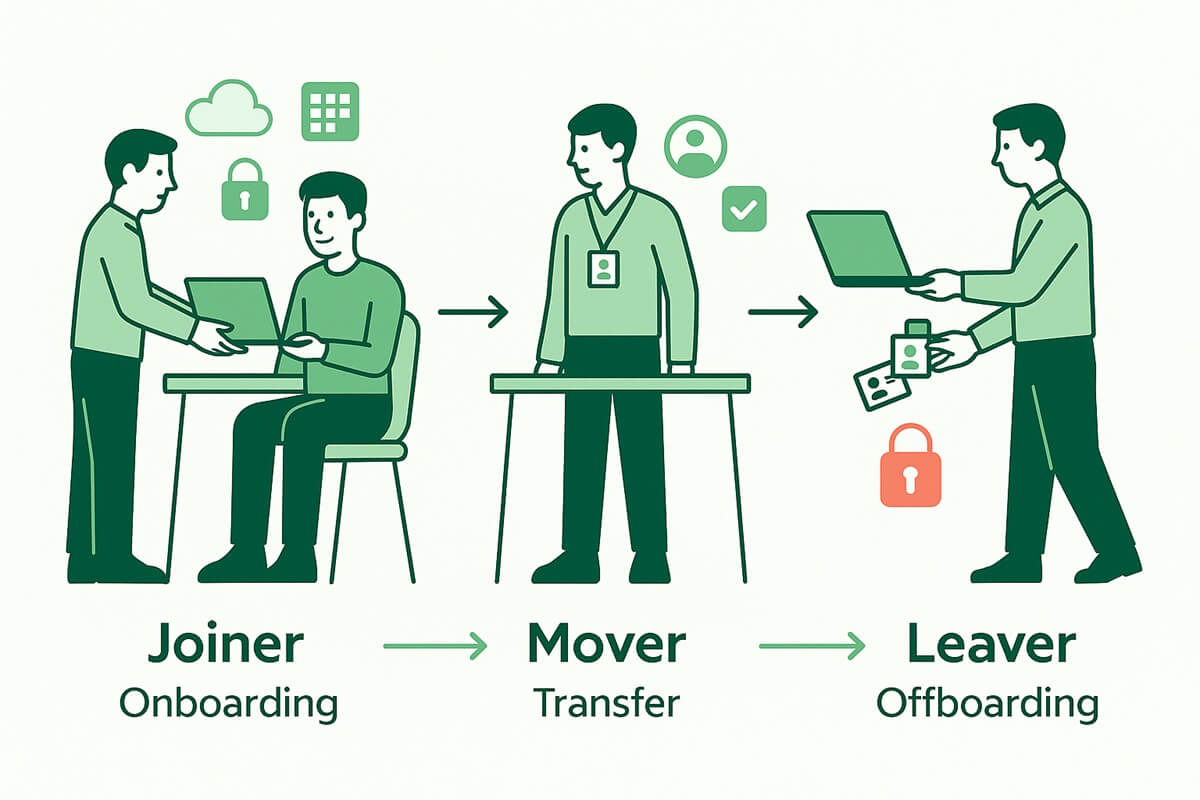
How can a company ensure that the right individuals gain entry to its systems, data and applications while keeping others out? New employees, those who transfer internally and employees who leave, must have their accounts properly provisioned. Appropriate controls ensure that users only have access to information that is need-to-know, and revoked access is made in a timely manner.
This is where the JML process in IAM becomes critical. It establishes a systematic way to manage user access during their user lifecycle – from onboarding to offboarding. This article looks at some practical strategies to help organizations optimize their joiner-mover-leaver (JML) approach. It identifies ways to improve efficiency and remain compliant utilizing standardized identity and access management (IAM) practices.
Accessible Onboarding for New Employees
Onboarding has the power to set the tone for the employee’s experience. A seamless onboarding experience provides access to the right tools, in a timely fashion. The key is to automate the process as well as provide role-based access.
Here are some best practices for onboarding:
- Role-based provisioning: Role-based provisioning provides access rights based on the employee’s job role – rather than an individual (or situational) request to add access. This will help reduce workload by the IT or HR team, as well as eliminate mistakes.
- Centralized identity repository: A single source of truth for each employee helps reduce duplicates; issues resulting from the inability to verify users may arise.
- Automated approval: Consider creating an automated workflow to channel access requests to the person’s manager, or the human resource management team, for approval.
These strategies allow new employees to be productive and company policy compliant from day one.
Seamless Management of Internal Transfers
Employee transfers between departments are frequent. Each transfer requires some access changes, and if access is mishandled, it can open up security holes. The possibility of those access rights being misused rises if the prior position’s access permissions have not been eliminated.
It makes sense for organizations to periodically inspect and update user access in light of these concerns. To guarantee that access is suitable for the job the user is brought into, a policy outlining the privileges to be retained and those to be eliminated at the time of transfer should be created. Ongoing audits helps an organization continue to proactively ensure users are provided only user access relevant to the position.
Guarantees Secure Offboarding Procedure
When workers depart, their access must be promptly withdrawn and they must be offboarded. The organization’s data and systems are at greater risk if employee access is not revoked.
Key steps for secure offboarding:
- Immediately revoke access to systems and applications.
- Retrieving all company devices and credentials.
- Archiving user data according to legal and compliance measures.
- Executing audits post-this departure to ensure complete access revocation.
All of these items will help the organization to maintain security post-employment.
IAM Policies Comply with Regulatory Requirements
User access must be strictly controlled in order to comply with laws and regulations including GDPR, HIPAA, and SOX. Assurances of compliance with these criteria will be made easier by IAM solutions that incorporate compliance frameworks. When compliance practices are aligned with IAM processes, organizations can achieve greater accountability across teams while reducing risks associated with legal exposure and financial liability.
Regular reviews of the JML process in IAM reveal potential inefficiencies. Input from the IT, HR and compliance teams will inform any procedural changes. Ongoing changes to workflows allows the system to accommodate organizational changes and regulatory changes.
An efficient JML process results in the organization being more efficient while adapting to regulatory requirements. Sequential automation, role-based access, and least privilege concepts, which are the basis for an effective IAM strategy. By effectively implementing or adapting some of these best practices organizations can manage the user lifecycle process more effectively, balance risk and have appropriate control of access to all lines of business systems.