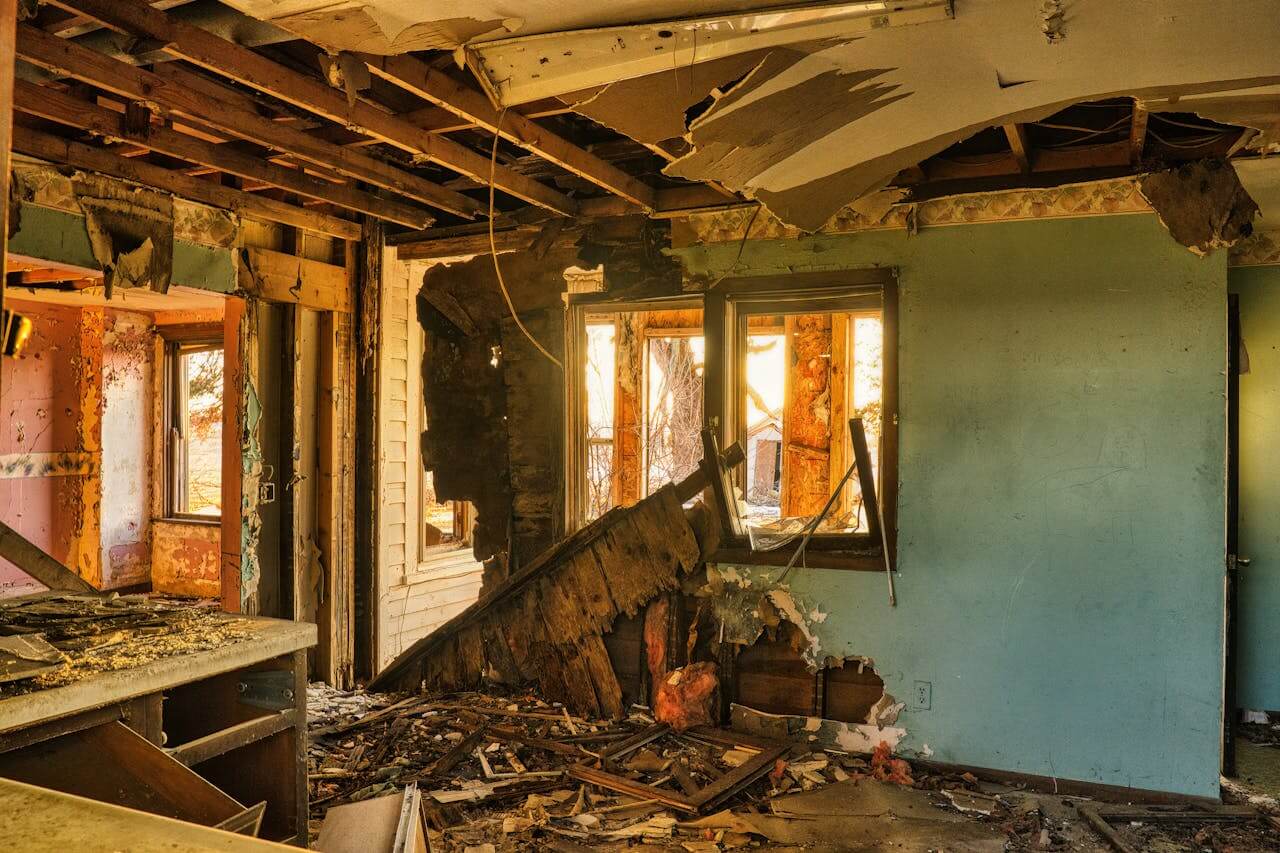
A house can feel unsettled before anyone names it a disaster. A door swells and sticks after days of rain. The hallway light flickers beneath a ceiling that used to feel solid. There’s a slight ripple in the hardwood near the back window. Nothing dramatic. Just the sense that something has shifted out of place.
In Redmond and Woodinville, that shift is often tied to weather patterns that rarely hurry. Both these regions experience rainfall from late fall through winter and frequent rainy days across much of the year. Redmond’s population has climbed past 80,000, while Woodinville has grown beyond 13,000. More households settled beneath evergreens. More foundations along gentle slopes where runoff has to move somewhere. More attics, more crawl spaces, more materials absorbing moisture season after season. When storms stall or temperatures dip suddenly, small vulnerabilities begin to show.
Disaster rarely announces itself in a single moment. It develops. A pipe gives way during a cold snap. A washing machine hose loosens in the night. Rain works through compromised flashing and travels slowly through insulation before a stain appears overhead. The incident may be abrupt. The aftermath rarely is. It lingers, uneven and quiet, asking to be addressed piece by piece.
When Water Finds a Way In
In this region, water damage is often the first chapter in a larger repair story. Heavy rain tests flashing and gutters. Saturated soil presses against foundations. Interior plumbing failures add another layer of risk. Once water enters, it moves quietly—behind baseboards, beneath flooring, into wall cavities where air barely circulates.
Water damage restoration is less about what looks wet and more about what cannot be seen. Moisture seeps into framing and subflooring. Drywall softens from the inside. Insulation traps dampness against wood. Left alone, mold begins to form in corners that rarely get daylight.
Companies like PuroClean of Redmond/Woodinville support homeowners throughout both communities with water damage restoration, fire and smoke cleanup, mold remediation, biohazard cleanup, and reconstruction services when disaster strikes.
The process is methodical. Standing water is extracted. Industrial air movers and dehumidifiers are positioned to pull moisture from structural materials. Damaged sections are removed when drying alone isn’t enough. Measurements are taken. Readings checked again. It can feel repetitive, but that repetition is what protects the structure long term.
Then comes reconstruction. New drywall. Fresh insulation. Flooring replaced or refinished. The goal is not simply to make the room look whole again, but to restore its stability. Floors that feel firm underfoot. Walls that don’t carry a hidden softness. Air that smells clean rather than faintly damp.
Afterward, habits shift. Gutters are cleared more regularly. Appliance hoses are inspected. Minor leaks are addressed sooner. Not out of panic. Just awareness.
Fire, Smoke, and What Lingers
Fire damage is more visible at first glance. Blackened studs. Melted wiring. Cabinets warped by heat. But even a contained fire leaves smoke that travels well beyond the source. It threads through vents and settles into porous materials. It leaves behind an odor that doesn’t quite belong to anything specific.
Restoration here moves carefully. Soot is removed from surfaces. Air systems are cleaned. Materials too damaged to be safe are replaced entirely. Structural components are inspected to ensure they remain sound. The work is practical, but it also carries a quiet weight. A house that has experienced fire feels exposed for a while.
Rebuilding often invites reconsideration. Electrical systems are updated. Fire-resistant drywall may replace what was lost. Ventilation improves. Storage is rethought. Recovery becomes less about returning to what was and more about reinforcing what will last.
Mold, Air, and the Hidden Corners
At times, the change is so subtle it feels imagined. A closet carrying a faint earthy scent that wasn’t there before. A window still beading with moisture long after the rain has passed. Small details that don’t call for alarm, yet remain in the background of a room, are difficult to ignore once noticed.
Mold remediation is less about scrubbing a visible patch and more about tracing where moisture traveled and why it remained. Sections of drywall may need to be removed. Insulation replaced. Air scrubbers run for days to capture what cannot be seen. Containment barriers go up, not to alarm anyone, but to keep the rest of the house undisturbed while one area is made right.
Then there are the adjustments that follow. Ventilation improved in bathrooms that once held steam too long. Attic vents cleared so warm air has somewhere to escape. Crawl spaces lined and sealed to reduce ground moisture rising into the structure. Small corrections, almost invisible once complete.
Over time, the difference shows up in ordinary ways. Closets smell neutral again. Windows clear quickly in the morning. The air feels steady, neither heavy nor stale. It’s subtle. Easy to overlook. But these hidden corners shape how a home is experienced every day. And restoring them restores more than materials—it restores ease.
Post-Disaster Recovery
Post-disaster recovery is sometimes described in stages—mitigation, demolition, reconstruction—but daily life measures it differently. It shows up in smaller milestones.
The first night sleeping in a repaired bedroom. The return of furniture to its usual corners. The absence of fans and drying equipment humming around the clock. The way the air stops smelling like cleaning solution or damp wood.
Comfort returns gradually. At first, every creak feels amplified. Rain tapping on the roof draws more attention than it used to. A new patch of drywall catches the eye for weeks. Over time, those details fade back into the background.
Home improvement after a disaster is rarely about dramatic upgrades. It is about resilience. Reinforcing foundations. Improving drainage around the perimeter. Installing better ventilation in attics and crawl spaces. Choosing materials suited for a climate that stays wet for much of the year. Practical decisions that may never be noticed once complete. Normal doesn’t return in a single moment. It settles in quietly.